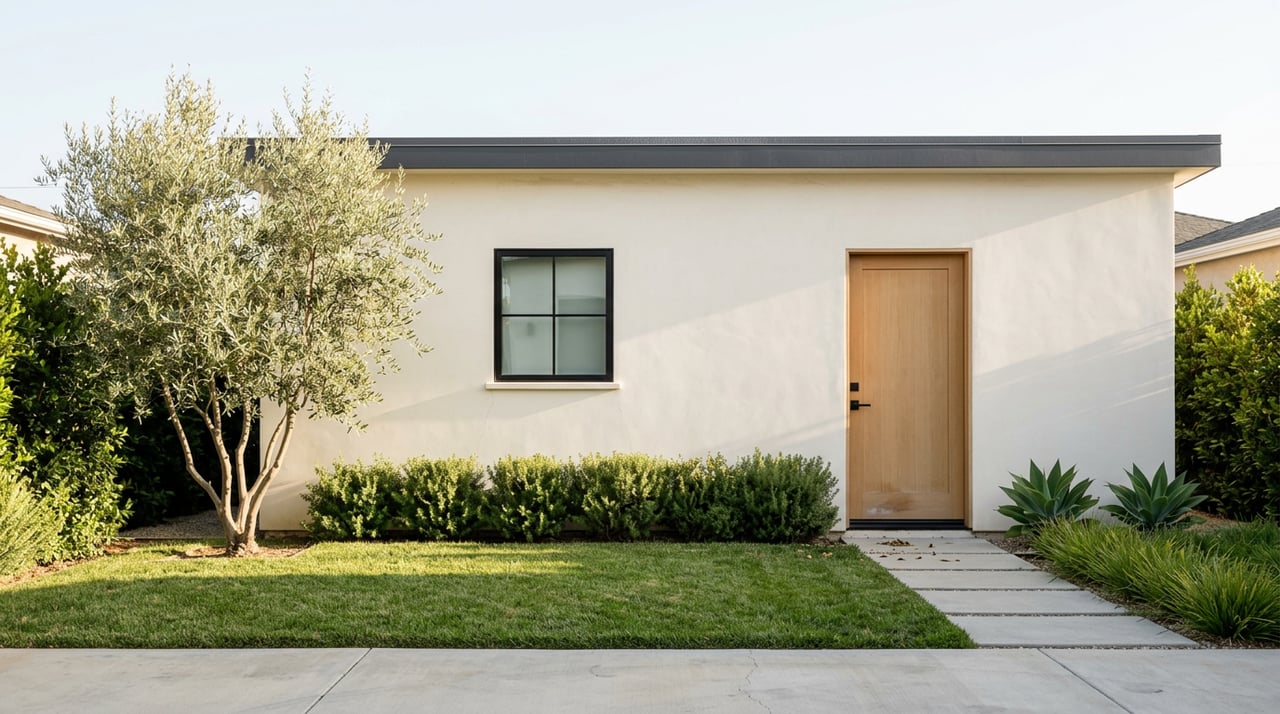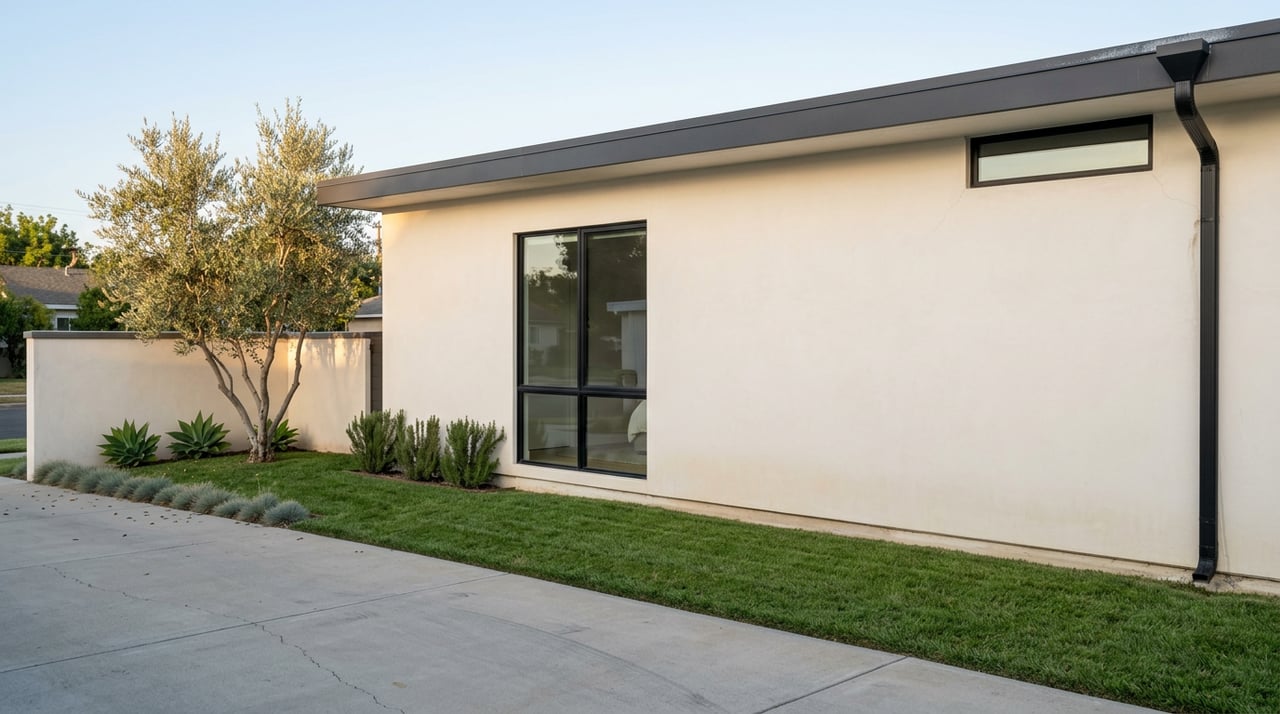
Ask a longtime Orange County buyer which Anaheim neighborhood costs more to buy into right now: the walkable historic core built around Center Street Promenade and the Packard Building, with its craftsman bungalows dating back to the city's original 1857 settlement, or the freeway-adjacent west side known for tract homes near the 91. Most people guess the historic district. The trailing sales data says otherwise.
Over the three months ending May 2026, West Anaheim homes closed at a median of $935,000, up 6.7% from the same period a year earlier. Over that same window, the Anaheim Colony Historic District, the neighborhood most people picture when they think of Anaheim's charming original core, closed at a median of $792,000, down 6.3% year over year. That's a gap of more than $140,000 running in the opposite direction from what neighborhood reputation would predict, and it says something worth understanding before anyone writes an offer in either place.
What Four Anaheim Submarkets Actually Cost Right Now
The citywide numbers you'll see quoted most often, an average list price near $875,000 as of August 2026 and a median sale price closer to $948,000 for the three months ending May 2026, blend four housing markets that behave nothing alike.
| Submarket | 3-mo median sale price (through May/June 2026) | YoY change | Typical stock |
|---|---|---|---|
| Anaheim Hills | ~$1.1M | +0.9% | Larger lots, newer hillside construction |
| The Colony Historic District | $792K | -6.3% | Small 1900s-era bungalows and Victorians |
| West Anaheim | $935K | +6.7% | Single-family tract homes near the 91 |
| Platinum Triangle | $425K-$980K (condo range) | Stable band | Early-2010s mid-rise condos |
A citywide median sitting somewhere in the middle of that spread tells a buyer almost nothing about what their budget actually buys once they pick a side of the city.
The Backwards Line
The Colony's reputation is built on charm: brick-lined streets, weekly farmers markets, a downtown core close to the Anaheim Packing District. That reputation still shows up in rent. As of June 2026, average rent in the Colony ran $2,578 a month, well above West Anaheim's $2,307. On the rental side, the historic core is still the more expensive place to live day to day.
The sale price tells a different story, and part of the reason is sample size. The Colony recorded only 33 closed sales in May 2026, up from 24 the year before, a small enough pool that a single higher-end sale can swing the number. That's visible in the same dataset: the average Colony house price actually jumped 18.4% year over year to $900,000 last month, even as the three-month median fell 6.3%. Average and median moving in opposite directions in the same neighborhood over the same window is a clean signal that the market there is thin enough to be noisy.
West Anaheim isn't thin. It logged 122 closed sales in May 2026, up from 92 a year earlier, more than three times the Colony's volume. A median built on 122 transactions is a sturdier number than one built on 33, and that median has been climbing for a real reason, not a statistical fluke.
Why Smaller And Older Doesn't Win The Price Race
The mechanism comes down to what the housing stock can do. Colony homes are frequently small, older, and built to a footprint that doesn't leave much room for the kind of addition or open-concept remodel that adds appraised value in today's market. Some listings in the district note the layouts as compact by modern standards and mention infrastructure that needs upkeep, the tradeoff for buying into a home with genuine 1900s character.
West Anaheim's single-family stock sits on larger lots with more room to add square footage, and it has drawn real investor interest tied to the neighborhood's sizable renter population. That combination, more land to work with and steady buyer demand from people looking to hold and rent, is a more durable driver of price appreciation than a walkable downtown core built on small, historically constrained lots.
None of this means the Colony is a bad buy. It means a buyer comparing the two neighborhoods on reputation alone, assuming the "nicer, more historic" area automatically costs more, would have priced the comparison backwards this past spring.
The Same Rule Shows Up At The Top And The Edges
Anaheim Hills confirms it from the other direction. The hillside submarket posted a median sale price near $1.1 million for the three months ending June 2026, the highest in the city, on inventory tight enough that listings there were running around 0.65 months of supply as of mid-2026, meaning almost nothing sits on the market. That premium tracks newer construction and larger hillside lots, the same lot-size logic driving West Anaheim's climb, just at a different price tier. Buyers who want the same submarket at a lower entry point can look at Anaheim Hills condos, which have traded closer to $680,000, a reminder that housing type inside a single neighborhood can matter as much as the neighborhood itself.
The Platinum Triangle makes the opposite point. Built almost entirely as mid-rise condo product in the early 2010s around Angel Stadium and Honda Center, its price band runs a tight $425,000 to $980,000 with no wide single-family swing at either end, because there's no single-family stock to swing it. Buildings like Stadium Lofts sit alongside the ARTIC transit hub, and the district is still absorbing new development tied to Henry Samueli's roughly $3 billion OC Vibe project around Honda Center, first announced in 2020. Because the housing stock there is uniform, condos of similar vintage and size, the price range stays uniform too. That's the same rule as the Colony and West Anaheim, just running in a tighter band: price spread tracks what's actually built, not the neighborhood's name recognition.
How To Read Any Anaheim Submarket Before You Write An Offer
- Ask for the trailing three-month median for the specific submarket, not the citywide figure. A $948,000 city median hides a $792,000 Colony and a $1.1 million Anaheim Hills.
- Check the monthly sales count. Under 40 closings a month, like the Colony's 33 in May 2026, means the median can move on a handful of sales. Over 100, like West Anaheim's 122, is a steadier read.
- Compare the sale-price trend to the rent trend for the same area. When they move in opposite directions, as they currently do between the Colony and West Anaheim, it usually means the sale market and the rental market are pricing in different things.
- Ask what share of the stock is condo versus single-family. That ratio explains price-band width more reliably than the zip code does, as the Platinum Triangle's tight condo range shows next to Anaheim Hills' wider single-family spread.
- Weigh direction, not just level. A $792,000 median falling 6.3% and a $935,000 median rising 6.7% are headed toward each other. Six months from now the gap could look very different.
Frequently Asked Questions
Does this mean West Anaheim isn't the affordable entry point anymore? Not entirely. Local market reporting from earlier in 2026 put West Anaheim single-family starting prices somewhere between $600,000 and $850,000, well below the $935,000 three-month median through May 2026. The gap between a "starting" price and a "median" price usually means fewer true starter homes are trading and more mid-size, renovated homes are making up the sales mix. Entry-level opportunity still exists there. It's just gotten harder to find at the bottom of the range.
Why does the Colony still command higher rent if its sale prices are lower? Rent reflects who wants to live somewhere day to day, walkability, small-unit demand, proximity to the Packing District and downtown restaurants. Sale price reflects what's actually changing hands in a given window, which in a low-volume market like the Colony can be skewed by just a few transactions. The two numbers are answering different questions.
Where does a buyer priced out of Anaheim Hills look next? Anaheim Hills condos near $680,000 keep a buyer in the same hillside submarket at a lower cost, or East Anaheim's $750,000 to $950,000 range offers similar single-family stock without the Hills' 0.65-month inventory squeeze.
The number that matters isn't the one on the citywide chart. It's the one for the four or five blocks a buyer actually plans to live on, checked against how many homes sold there last month and which direction that median is moving. That's the kind of read a market snapshot can't give you and a local conversation can.
If you're weighing an Anaheim submarket against your budget and want the trailing numbers pulled for the specific streets you're considering, along with financing options built around what you actually qualify for, Namy Inc puts brokerage and in-house mortgage work under one roof so you're not getting a market read from one person and a loan estimate from another. Schedule a free consultation and we'll walk the numbers with you before you write an offer.