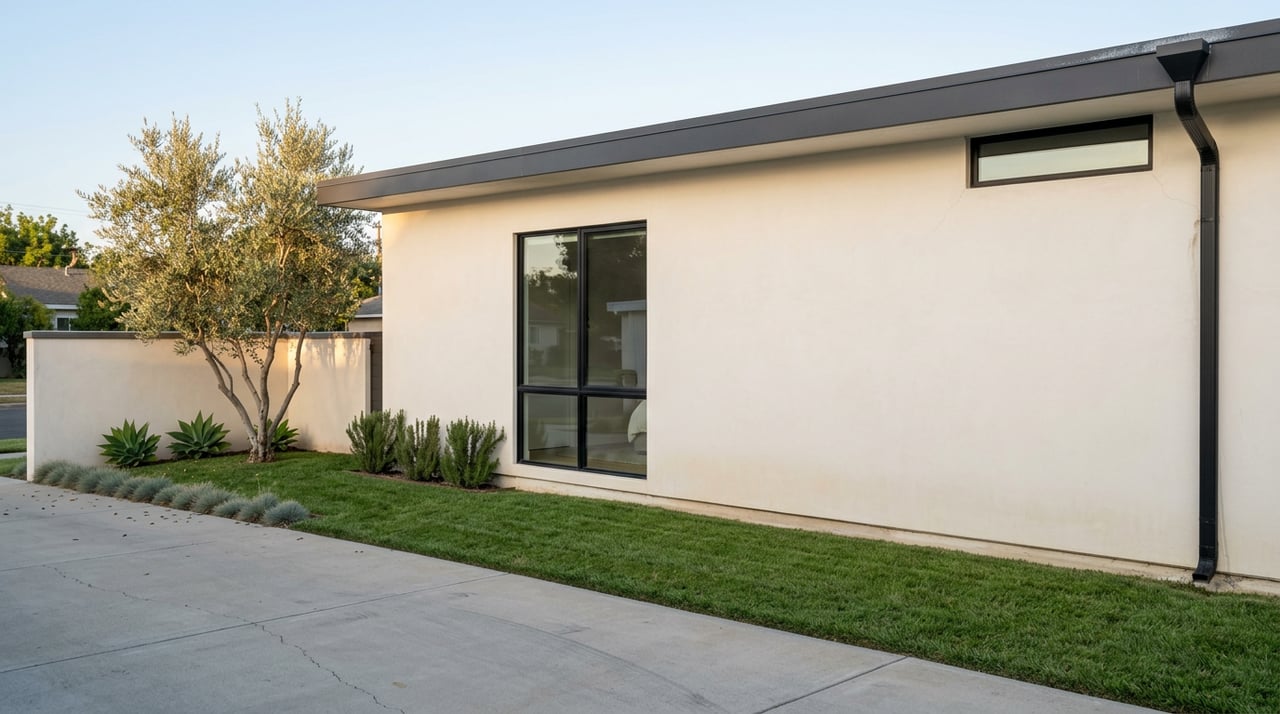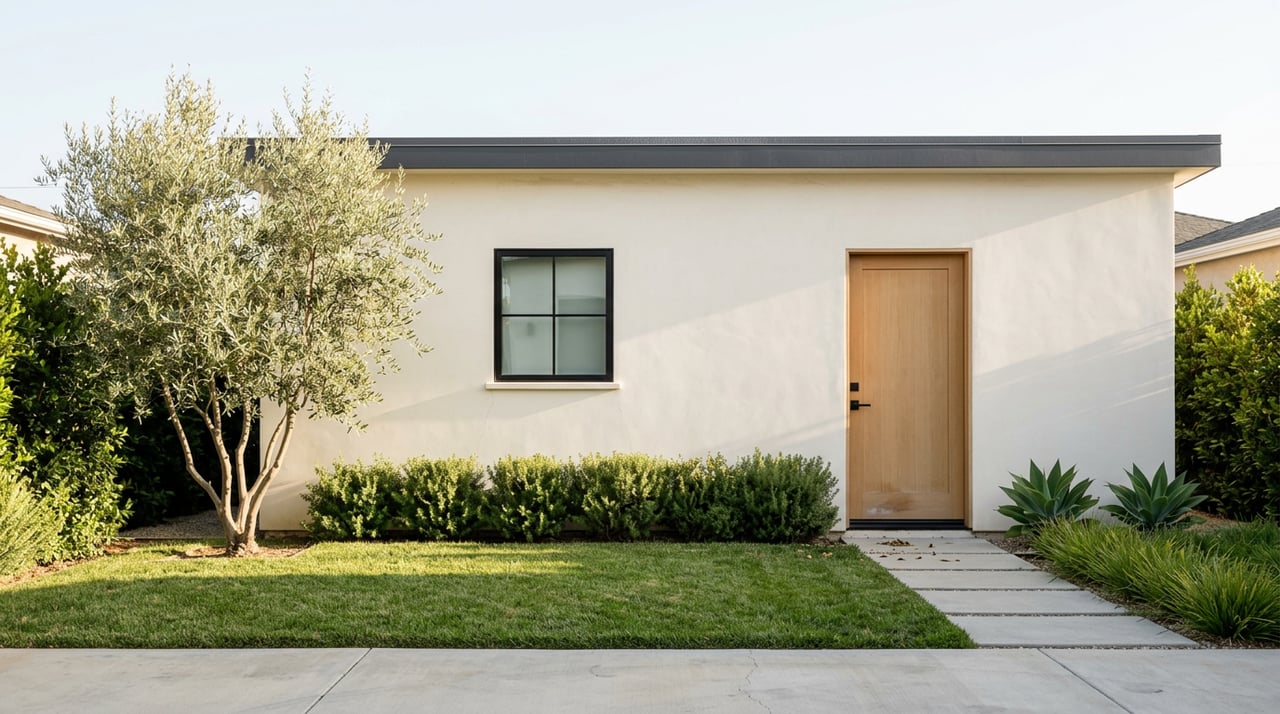
Two three-bedroom ranch houses can sit on the same postwar block in Garden Grove, share a lot size, a roofline, and a builder from the same 1950s tract, and still land tens of thousands of dollars apart at appraisal. The difference usually isn't the kitchen. It's what's happening behind the detached garage.
A permitted accessory dwelling unit changes how an appraiser reads a Garden Grove property, and it changes what a seller needs to disclose before escrow closes. Most of what gets written about ADUs treats them as a generic California story: state law, granny flats, housing crisis. In Garden Grove specifically, the mechanism is more concrete, and it runs through the city's own housing stock, its own permitting rules, and a 2025 ordinance rewrite that's still being corrected by the state.
The Postwar Grid That Makes This Math Possible
Garden Grove's housing supply is mostly single-family homes built between the 1950s and 1970s, laid out on a deep, flat grid with detached garages, the classic geometry of a postwar tract. That layout happens to be close to ideal for a backyard unit or a garage conversion: no hillside grading, no retaining walls, and a structure that's already standing in the right spot.
The volume backs this up. In 2024, the city permitted 426 accessory dwelling units, the most of any year on record going back to 2013. A large share of these aren't built as income units at all. They house aging parents, adult children, or extended family on the same lot, which lines up with how many Garden Grove households already live.
That volume is exactly why an appraiser here has a number to point to. In a market where a legal second unit is common, its presence or absence in the comps becomes a measurable variable instead of a hypothetical one.
Reported 2026 figures put a permitted detached ADU at $150,000 to $240,000 in added appraised value, and a garage conversion at $90,000 to $150,000. Garden Grove's own inventory of flat, deep, postwar lots is a big part of why those numbers exist at all.
What The City Changed In 2025, And Why The Clock Now Matters
Garden Grove adopted Ordinance No. 2966 on August 12, 2025, rewriting Municipal Code Chapter 9.54 to bring local ADU rules in line with the latest round of state law. Alongside it, the city runs a program called ADU Go: four city-owned, pre-approved construction plans, ranging from a 447-square-foot studio to a 1,000-square-foot three-bedroom, that owners can download for free and build without paying for custom architectural design.
Applications built on one of those four plans reportedly move through a roughly 30-day ministerial review. Anything custom still falls under the state's standard 60-day ministerial clock. Both tracks are filed through GG Ready, the city's fully digital permitting portal, which launched in 2023 and which councilmembers have credited with cutting permit wait times since.
Here's the part that matters for anyone about to write a contract around this: the state's Department of Housing and Community Development reviewed Ordinance 2966 in March 2026 and flagged several provisions that go beyond what state law allows cities to require, including garage setback rules and structure-separation requirements. The city hasn't finished squaring its local text with state preemption. If a seller, buyer, or lender is leaning on a specific clause in the current municipal code, it's worth confirming with the city's Community and Economic Development Department that the clause is still standing, rather than assuming the published ordinance is the final word.
What Each ADU Type Is Actually Worth
The build cost, the rent it can generate, and the appraisal credit it earns don't move together in a straight line. A garage conversion is cheaper to build but caps out lower at resale. A detached unit costs more up front and carries more of the appraisal gain.
| ADU Type | Typical Build Cost (2026) | Monthly Rent (2026) | Typical Appraisal Add |
|---|---|---|---|
| Garage conversion or JADU | $95,000–$185,000 | $2,000–$2,500 | $90,000–$150,000 |
| Detached new-build (1–2 bedroom) | $220,000–$320,000 | $2,300–$3,600 | $150,000–$240,000 |
The gap between build cost and appraisal add is the number worth sitting with. A garage conversion at the low end of its cost range can still return most of that spend at resale, which is a different equation than most home improvements offer.
The Paperwork That Surfaces At Escrow, Not At The Open House
A few rules trip people up specifically in Garden Grove, and they tend to surface during inspection or loan underwriting rather than during a showing.
- Permit history decides the appraisal, not square footage. An appraiser credits legal, permitted living space. A garage that's been converted without a permit typically appraises as storage or gets excluded from the living area count entirely, and it can slow down escrow while title and permit history get sorted out.
- Utility metering has one exception that catches owners off guard. ADU water, gas, and electric usually route through the main house's existing meters. But if a detached unit needs a new sewer lateral, the city's submittal rules require a separate water meter to go with it, an added line-item cost that doesn't show up in most early budget estimates.
- Short-term rental isn't part of the income picture. Garden Grove prohibits short-term rental of the primary residence, the ADU, and the JADU alike. Any pro forma built around nightly rates needs to be rebuilt around long-term lease economics instead.
Where This Puts A Seller Right Now
Monthly trackers for Garden Grove have bounced enough in 2026 that a single month's print isn't a reliable read on its own. One tracker showed a citywide median of $1,046,000 in April 2026, then $967,000 in May, a swing largely driven by which homes closed that month rather than a real shift in the market. Redfin's rolling three-month figure through April 2026 put the citywide median closer to $1.0 million, up about 8% year over year, with homes going pending in around 28 to 30 days and a competitiveness score of 84 out of 100.
The more telling number sits in West Garden Grove specifically. Over the three months ending May 2026, the median sale price there dipped slightly year over year, but price per square foot rose 11.8% to $727. That's the pattern this whole piece is about: when the price-per-square-foot line climbs faster than the median itself, buyers are pricing the lot and what it can hold, not just the finish level of the structure sitting on it.
For a seller with a legal ADU already in place, or a lot that clearly supports one, that's a real pricing lever right now, not a someday feature. For a buyer, it's a reason to ask for permit records before falling in love with a backyard.
Where NAMY Fits Into This
This is exactly the kind of transaction where having financing, brokerage, and development knowledge under one roof pays off. Pricing a listing with a legal second unit correctly, verifying its permit history before it becomes an escrow surprise, and structuring a mortgage that accounts for that unit's rental income are three separate skill sets that usually live in three separate offices. NAMY Inc keeps them in one.
If you're weighing a Garden Grove sale, a purchase with ADU potential, or a build on a lot you already own, schedule a free consultation and we'll walk through what the appraisal, the permit history, and the financing actually look like for your specific property.
Frequently Asked Questions
Does an unpermitted garage conversion count toward my home's value at appraisal? No. Appraisers credit legal, permitted living space only. An unpermitted conversion is typically valued as storage or excluded from the square footage count, and it can complicate title work once it's discovered during escrow.
Can financing account for an ADU's rental income before it's built? This depends on the loan program and how the unit is being built, whether as part of a purchase, a refinance, or a standalone construction loan. It's worth a direct conversation with a lender who can walk through your specific numbers rather than relying on a general rule of thumb.
Does the 30-day review apply to any ADU project, or just the city's own plans? Just the four city-owned ADU Go plans, which range from 447 to 1,000 square feet. A custom garage conversion or a detached unit built from your own architect's drawings still falls under the state's standard 60-day ministerial review.