Thinking about selling your Huntington Beach home but unsure what it might fetch? An instant home valuation can give you a fast number, yet coastal properties often swing in value based on small details like view lines, parking, or HOA rules. You want a simple starting point and a realistic plan that fits your 3- to 6-month timeline. In this guide, you’ll learn how instant values work, where they shine, when they miss, and how a local agent turns that estimate into a smart list price and prep plan. Let’s dive in.
Why start with an instant value
An instant home valuation gives you a free, quick estimate of your property’s value. It pulls from public records and recent sales to produce a range, which is helpful if you’re deciding whether to list soon.
In areas like Huntington Beach within the Anaheim–Santa Ana–Irvine metro, demand is shaped by beach access, lifestyle amenities, and commuting options. A quick estimate helps you gauge where your home might sit relative to the broader market. Think of it as a baseline that you’ll verify and refine.
AVMs work best for typical single-family homes in neighborhoods with frequent sales and consistent floor plans. For unique, coastal, or heavily remodeled homes, you’ll want an agent’s review to reduce guesswork.
How instant valuations work
Data behind the estimate
Instant valuation tools, often called AVMs, pull from:
- Public records and assessor data (square footage, lot size, bed/bath count)
- Recent sales and listing history from local market data
- Property attributes (year built, parcel features)
- Broad market indicators like local pricing trends
Some tools also allow you to add updates, such as a remodel or addition, to fine-tune the estimate.
Strengths you can use
- Fast and free baseline across many properties
- Useful first step for deciding whether a full pricing review is needed
- Reasonably accurate in homogeneous tracts with frequent comps
Limits in coastal areas
- Unique properties often confuse models: oceanfront, custom builds, or homes with unpermitted work
- Data lag can miss recent renovations or hidden condition issues
- Micro-market effects matter: view corridors, distance to the beach or pier, and even parking patterns can shift value block to block
- Non-price factors like HOA restrictions, special assessments, and insurance considerations can change buyer demand but may not be fully captured
Treat the instant value as a range, not a list price. It tells you where to start, not where to finish.
When an agent refines the number
CMA with true comps
A licensed agent prepares a Comparative Market Analysis that matches your home to truly comparable properties. Recent sales within the same neighborhood anchor the analysis, and current active and pending listings show what buyers see right now. Adjustments account for differences in size, lot, condition, and especially view and proximity to the beach.
On-site insights that change price
A walkthrough can reveal small details that impact value: roof and deck condition in a salt-air environment, window quality, layout flow, and curb appeal. Modest upgrades or deferred maintenance can move your price range more than you might expect.
Micro-market trends to watch
An agent tracks days on market, inventory movement, and timing shifts that may have occurred since the AVM last refreshed. In coastal areas, spring and summer often bring more leisure buyers, while professional relocations can arrive year-round. Mortgage rate changes and broader California trends also influence buyer urgency.
Pricing strategy and buyer segments
Your strategy depends on who you want to attract. Investors, second-home buyers, and local owner-occupants respond to different price points and marketing angles. Your agent will advise whether to price slightly under market to spark interest, price at market to maximize traffic, or list above market only when unique advantages justify it.
Huntington Beach factors that move price
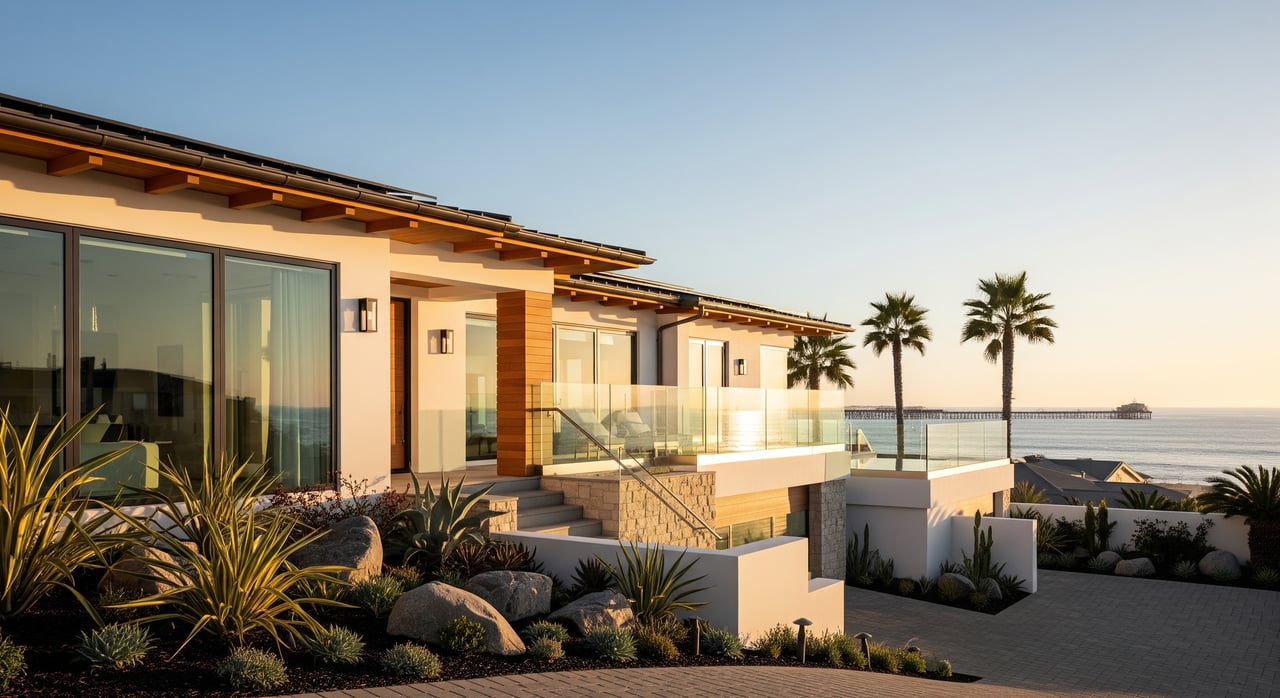
- View and proximity to the beach: Even partial ocean views or an easy pedestrian route to the pier can shift value compared to nearby addresses without these features.
- Coastal maintenance and insurance: Salt air accelerates wear on roofs, decks, and exterior finishes. Insurance costs and any specific coastal risks can influence buyer decisions and pricing.
- Parking and street access: Garage size, driveway utility, and on-street parking patterns near commercial corridors like Main Street or Pacific City affect perceived value.
- HOA rules for condos and townhomes: Rental caps, reserves, and special assessments are central to how buyers price risk.
Your 3- to 6-month plan
Step 1: Get your instant estimate
Use an instant valuation to set a starting range. Note where your home seems to land relative to nearby sales and consider whether your property is typical or unique for the area.
Step 2: Gather key documents
Have these ready before your pricing meeting:
- Assessor parcel number and recent property tax bill
- Deed and any recorded documents
- HOA disclosures, rules, and fee summaries if applicable
- Permit records for improvements
- Receipts for upgrades and recent service (roof, HVAC, windows)
- Utility bills and any known issue notes (roof, foundation, termite history)
Step 3: Consider a pre-listing inspection
A pre-listing inspection can surface repairs early, help you prioritize fixes, and give buyers confidence. It may reduce renegotiations and shorten time in escrow.
Step 4: Prep that pays
In a coastal environment, focus on maintenance and targeted updates:
- Address structural and weathering items first: roof, gutters, flashing, exterior paint, decking, and wood preservation
- Update high-impact areas: kitchens and baths if outdated, plus fresh paint and flooring where worn
- Improve curb appeal: simple landscaping, clean entry, and clear pathways
- Document permitted work to strengthen buyer confidence
Step 5: Choose timing and price
- Monitor the market: Track local inventory and rate moves as you approach listing
- Pick a strategy: price slightly under market to create interest, or price at market to maximize traffic; list above market only when unique value is clear
- Align with seasonality: Spring and summer often bring more showings in coastal areas, but your personal timing and local momentum should lead
What to expect from a refined valuation
After reviewing your instant estimate and visiting your home, a local agent should deliver:
- A recommended listing range with clear comps and adjustments
- A prioritized repair and staging plan focused on return on investment
- A marketing plan with timing guidance, photography, and target buyer profiles
- A net sheet that estimates your proceeds after typical costs and any concessions
Because the regional market is shaped by broader forces like mortgage rates and local employment, your agent will continue to check updated data and adjust guidance before you go live.
Why Huntington Beach sellers benefit from local expertise
Huntington Beach sits in a coastal submarket where small details change outcomes. Lot depth, orientation, and even a sliver of a view can matter. Condos and townhomes also bring HOA dynamics that influence pricing and days on market. A local valuation connects these variables with recent neighborhood sales, which is the most reliable path to a confident list price.
Ready to move from estimate to action?
If you plan to sell in the next 3 to 6 months, start with an instant valuation, then schedule a local pricing review and walk-through. You will leave with a clear list price range, a prep plan that fits your budget, and a timeline that matches the market. For a simple, integrated process that combines pricing, listing prep, and lending expertise under one roof, contact Namy Inc to schedule a free consultation.
FAQs
How accurate are instant home values in Huntington Beach?
- They are a helpful starting range, generally more reliable for typical homes with recent nearby sales and less reliable for unique or coastal properties with view, condition, or HOA factors.
Why might an agent’s CMA differ from my online estimate?
- Agents add local comps, on-site condition checks, and micro-market timing to adjust the number, which can move the price meaningfully in coastal areas.
What documents should I prepare before a valuation meeting?
- Your assessor parcel number, recent tax bill, deed, HOA documents, permits, upgrade receipts, utility bills, and notes on known issues are most useful.
When is the best time to list a Huntington Beach home?
- Spring and summer often attract more leisure buyers, but the right timing depends on your readiness, local inventory, and mortgage rate trends.
Should I make repairs before listing near the beach?
- Yes. Prioritize safety and weathering items first, then target kitchens, baths, and curb appeal. Document permitted work to increase buyer confidence.
How soon before listing should I get a CMA?
- As close to listing as possible. If you plan to sell in 3 to 6 months, schedule a pre-listing consult about 4 to 8 weeks before you go live.