Rents and home prices in Orange County make ownership feel out of reach. If you live in Santa Ana, there is a practical way to lower your monthly cost while building equity: house hacking with an ADU or a small multi‑unit. You want a clear plan, realistic numbers, and a path that fits your budget. This guide lays out your options, how financing and underwriting work, what to expect from permits and timelines, and a simple example you can adapt to your situation. Let’s dive in.
What house hacking with an ADU means
House hacking is when you live in one unit and rent another to offset your mortgage. In Santa Ana, two paths are common:
- Add an accessory dwelling unit (ADU) or a junior ADU (JADU) to a single‑family home and rent it out.
- Buy a 2–4 unit property, live in one unit, and rent the others.
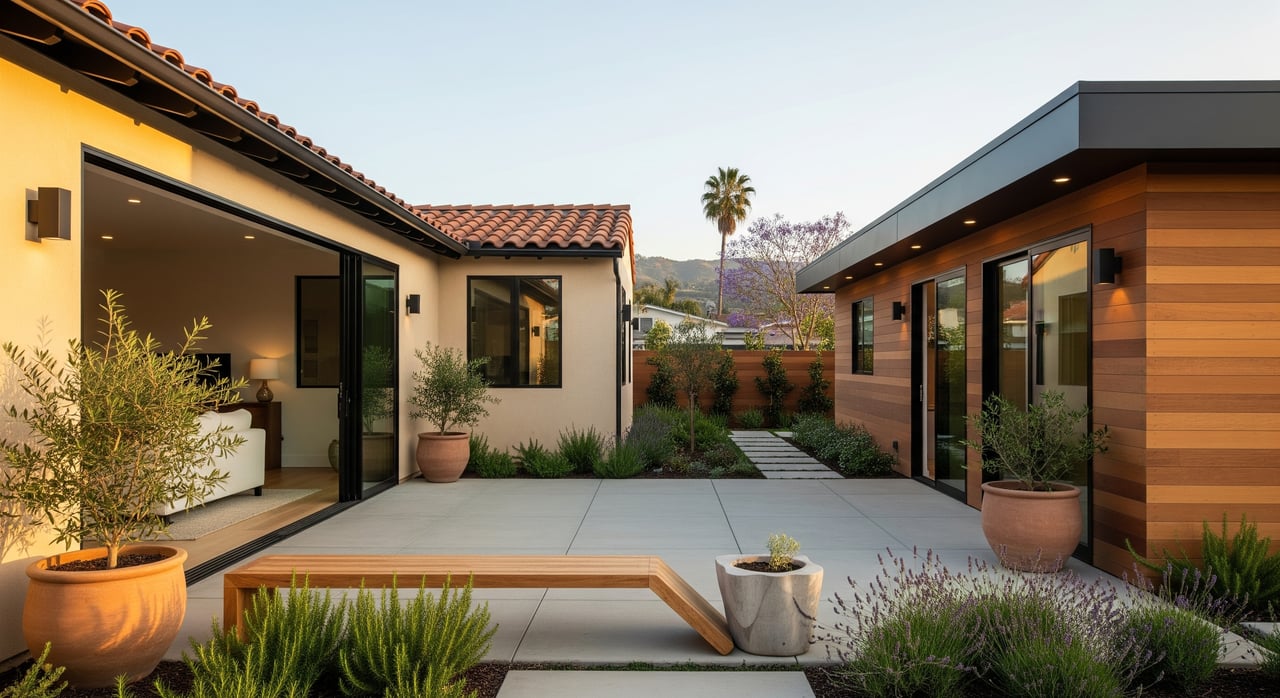
An ADU can be a detached backyard unit, a garage conversion, or an interior conversion that meets building code. A JADU is typically a smaller, contained unit created within the existing home. Both options can help you reduce your monthly payment while you live on site.
Why Santa Ana is ADU‑friendly
California updated state laws to expand ADU rights and simplify approvals. Cities like Santa Ana must provide a ministerial approval process for ADUs that meet objective standards. In many cases, parking requirements are reduced when the property is near transit, and smaller ADUs commonly face limited impact fees. Local standards still apply, so you should confirm current rules with the City of Santa Ana’s Planning and Building teams before you start.
The bottom line: compliant ADUs are easier to permit than they used to be. Timelines vary by project complexity, but straightforward ADUs can move from plan check to permits in a matter of weeks to a few months, with construction adding more time depending on scope and contractor availability.
Two paths to get started
Buy a home and add an ADU
If you find a single‑family home with a suitable lot, you can build a backyard ADU, convert a garage, or carve out a JADU inside the existing footprint. Your success depends on lot coverage, setbacks, utilities, and meeting building standards. State law limits some local restrictions, but Santa Ana’s objective standards still guide size, height, and placement. Plan on design, permit, utility, and construction costs, plus a contingency.
Pros:
- You control the design and finishes.
- You may add significant value to the property.
- You can phase work and financing.
Considerations:
- Upfront soft costs and construction timeline.
- Utility upgrades can add time and money.
- You need permits and final inspections before renting.
Buy a 2–4 unit and rent the other unit(s)
Buying a duplex, triplex, or fourplex can generate rent on day one if other units are leased and compliant. You must occupy one unit as your primary residence for owner‑occupied loans. Lenders can often count a portion of the other units’ rent to help you qualify, especially when leases or tax returns document the income.
Pros:
- Immediate rental income if units are already rented.
- Simpler than building an ADU from scratch.
- Clear comparable rents for underwriting.
Considerations:
- Purchase prices can be higher than single‑family homes.
- Shared maintenance and common systems.
- You must review leases, rent history, and compliance carefully.
Financing your house hack in Orange County
Conventional owner‑occupied loans
Conventional 30‑year fixed loans can work for both single‑family homes with ADUs and 2–4 unit properties. Some low‑down‑payment options accept rental income from an ADU or another unit under specific guidelines. Down payment, rates, and reserves depend on your profile. Ask how the lender will treat ADU income and what documentation they need.
FHA for 1–4 units and FHA 203(k)
FHA loans support 1–4 unit owner‑occupied purchases. You can buy a duplex with a low down payment if you live in one unit. If you plan to build or convert an ADU, FHA renovation options like 203(k) may help finance the work along with the purchase, subject to program rules. FHA underwriting has specific documentation needs for rental income and reserves.
VA loans for eligible veterans
If you are VA‑eligible, you may be able to buy a 2–4 unit primary residence with no down payment, provided you live in one unit and meet VA guidelines. Ask your loan officer how rents from the other units will be treated for qualification.
Construction and renovation loans
Construction‑to‑permanent loans and renovation products can cover ADU builds or conversions when you buy a house that needs work. These loans fund construction and then convert to a permanent mortgage at completion. Expect a detailed budget, contractor bids, inspections, and a clear path to final occupancy.
Portfolio and specialty lenders
Some community banks and credit unions offer ADU‑focused or flexible portfolio loans. These can be helpful when your plan does not fit standard overlays. Terms, rates, and down payments vary, so compare options.
Practical loan notes
- Owner‑occupant loans usually offer better terms than investment loans.
- You typically must occupy the property within a set time, often around 60 days.
- Down payment, reserves, and credit rules differ by loan type.
- Get pre‑approved by a lender experienced with ADU or multi‑unit underwriting before relying on projected rent.
How lenders count ADU or duplex rent
Underwriting focuses on documentation and conservative assumptions. Here is what to expect:
- If a unit is already rented, lenders may use signed leases, bank statements, or tax returns to document income.
- If the ADU is new, many lenders will rely on the appraiser’s market rent estimate in the appraisal report and count only a portion of it.
- A common rule of thumb is that lenders will allow about 75 percent of gross rent for qualification. This reflects a vacancy and expense cushion and is not universal. Ask your lender which factor they use.
- Appraiser market rent statements can be required when no rental history exists. Leases help, but Schedule E tax history is often strongest.
Plan for operating costs even when lenders do not explicitly count them, including vacancy, maintenance, and management if you will not self‑manage.
A simple Santa Ana pro forma example
Below is an example to show how an ADU or second unit can offset your monthly cost. This is illustrative only. Your numbers will vary by price, rate, taxes, insurance, and achievable rent.
- Purchase price: 700,000 dollars
- Down payment: 3.5 percent (FHA) = 24,500 dollars
- Loan amount: 675,500 dollars
- Interest rate: 6.5 percent fixed, 30 years
- Monthly principal and interest: about 4,268 dollars
- Property tax estimate: about 1.1 percent of price = 642 dollars per month
- Insurance: about 100 dollars per month
- Total PITI: about 5,010 dollars per month
ADU rent assumptions:
- Market rent for ADU or second unit: 2,500 dollars per month
- Lender countable rent at 75 percent: 1,875 dollars per month
Owner cost after rent offset:
- PITI minus countable rent: 5,010 minus 1,875 = 3,135 dollars per month
- Maintenance reserve: 200 dollars per month
- Property management (if used at 8 percent): 200 dollars per month
- Adjusted owner cost: about 3,535 dollars per month
What this shows: a well‑located ADU or a second unit in a duplex can materially reduce your carrying cost. Always run a conservative pro forma. Use realistic rent comps, include vacancy and maintenance, and confirm how your lender will count rent for qualification.
Permits, fees, and timeline in Santa Ana
State ADU laws streamline approvals for compliant projects, and Santa Ana applies local objective standards to site and design. Expect the following steps:
- Feasibility: confirm zoning, lot coverage, setbacks, easements, utilities, and any neighborhood design standards. A quick call or visit with Planning and Building can flag issues early.
- Design and plans: work with a licensed architect or designer to produce code‑compliant drawings.
- Plan check and permits: submit for building permits. Ministerial ADUs that meet all standards typically move faster. Historic properties, flood zones, or unique site conditions can extend timelines.
- Construction: timelines vary by scope. A simple garage conversion can be faster than a ground‑up detached unit.
- Final inspections and occupancy: you will need approvals before you advertise or collect rent.
Fees to plan for commonly include plan check, building permits, utility connections, and potentially impact fees for larger ADUs. State rules often limit impact fees for smaller ADUs up to a certain size, while allowing proportionate fees on larger units. Always verify the current fee schedule with the city before you set your budget.
Parking requirements are often reduced if you are near transit, but lot‑specific standards still apply. Confirm parking early to avoid surprises.
Risks and how to avoid them
- Unpermitted units: do not rent or count income from unpermitted spaces. It can cause problems with financing, insurance, resale, or after a disaster.
- Over‑optimistic rent: price with current local comps. Leave room for vacancy and maintenance.
- Underestimating costs: include design, engineering, permits, utility upgrades, and a contingency of 10 to 20 percent.
- Financing mismatch: not all loans count projected rent the same way. Get a pre‑approval that reflects your plan.
- Tax and insurance: rental income is taxable, and you may need landlord coverage or riders. Depreciation and later sale can involve recapture. Consult a CPA and your insurance agent.
Your step‑by‑step plan
Follow this simple sequence to reduce guesswork and keep momentum:
- Do a quick feasibility check with Santa Ana Planning to confirm allowed ADU types, size limits, and parking.
- Talk to experienced lenders for a pre‑approval. Ask how they treat ADU or unit rent for your specific loan.
- Get a market rent estimate for the ADU or other unit from local comps or an appraiser.
- Meet with a licensed architect and contractor for a feasibility review and budget, including permit and utility costs.
- Run a conservative pro forma using the lender’s rental income factor and add a contingency.
- Align financing and submit permits. If building an ADU, decide between renovation, construction, or portfolio financing.
How Namy Inc can help
You should not have to juggle a separate agent, lender, and developer when you are trying to lower your housing cost. Based in Garden Grove and active across Orange County, Namy Inc brings mortgage origination, residential brokerage, and small‑scale development expertise under one roof. We help first‑time and price‑sensitive buyers map a clear plan to house hack with an ADU or a 2–4 unit, from pre‑approval to property selection and budget review.
If you want a local strategy that balances permits, financing, and realistic rent assumptions, let’s talk. Schedule a free consultation with Namy Inc.
FAQs
What is an ADU vs. a JADU in Santa Ana?
- An ADU is an independent dwelling on a residential lot, while a JADU is a smaller, contained unit within the existing home; both must meet building code and local standards.
How long do ADU permits take in Santa Ana?
- Ministerial approvals for compliant ADUs often move in weeks to a few months, with construction timelines varying by scope and contractor availability.
Can lenders count projected ADU rent when I qualify?
- Many lenders will use an appraiser’s market rent and count only a portion of it, commonly around 75 percent, but you should confirm the exact approach with your lender.
What down payment do I need to buy a duplex with owner occupancy?
- FHA can allow a low down payment on 2–4 unit properties when you live in one unit, subject to program rules and underwriting.
Are small ADUs exempt from impact fees?
- State law often limits or caps impact fees for smaller ADUs in many jurisdictions, while proportionate fees may apply to larger units; verify the current Santa Ana schedule.
What insurance do I need when I add an ADU?
- You may need landlord coverage or riders in addition to your homeowner’s policy, and you should ensure the ADU is covered during construction and occupancy.